
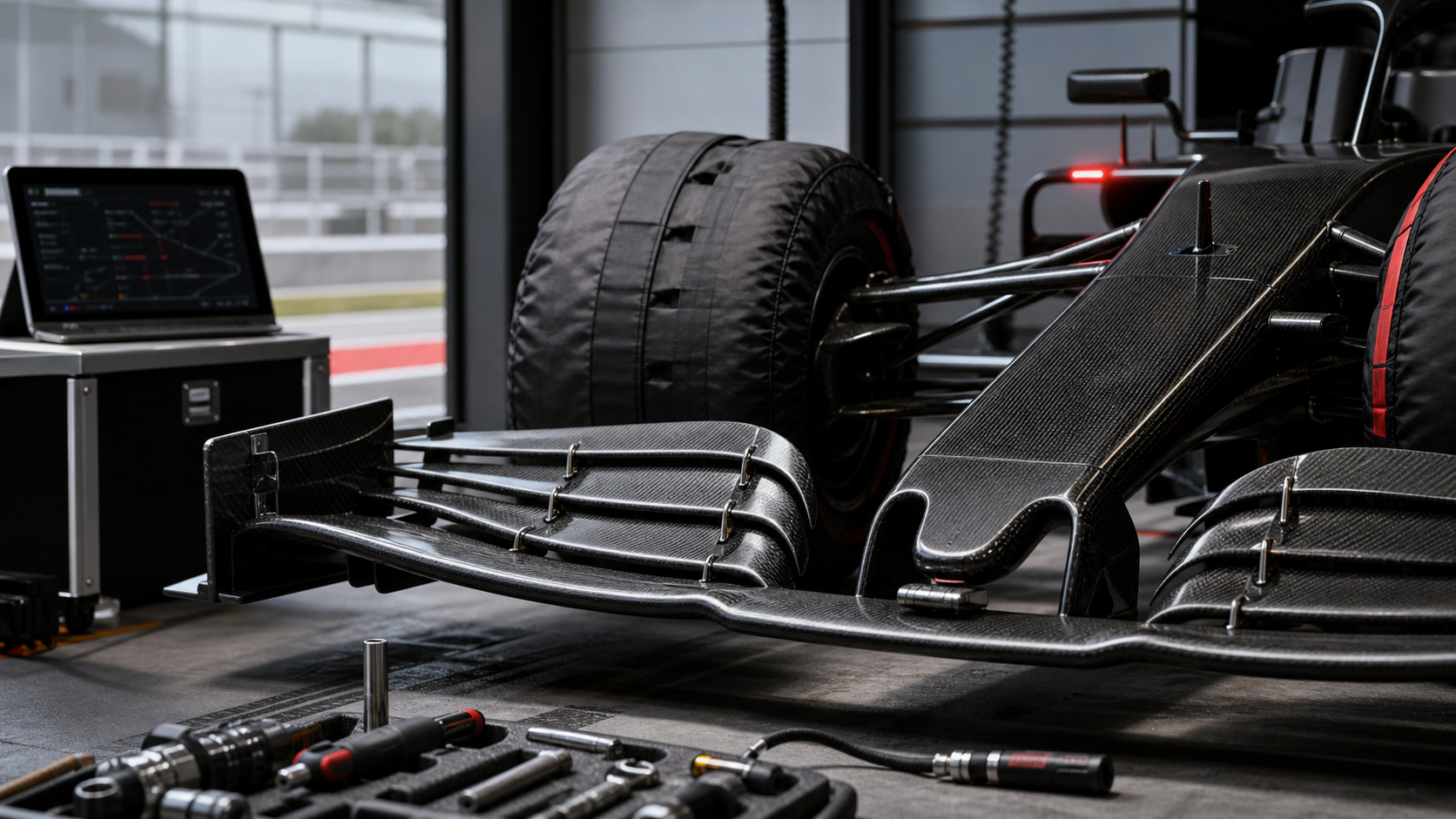
F1 has always been a data sport, but it no longer feels hidden behind the garage doors. Broadcast overlays, tire models, radio clips, and live strategy calls have made the invisible race part of the main show.
That does not mean teams are simply collecting more numbers. The difference is speed: how quickly they decide which data matters, how quickly they trust a model, and how quickly they turn a messy lap into a clean instruction.
The car is a sensor platform
Every lap is a moving test session. The car is measuring temperature, pressure, ride height, brake behavior, tire energy, deployment, and driver inputs. Some of that data feeds long-term development. Some of it needs to become a decision within seconds.
The tension is obvious: strategy needs confidence, but racing punishes hesitation.
| Data stream | Race-day use | Risk if misread |
|---|---|---|
| Tire temperature and degradation | Pit window, pace target, undercut defense. | Stopping too early or leaving the driver exposed. |
| Energy deployment | Overtake setup, defense, qualifying lap shape. | Burning battery at the wrong time. |
| Weather and track evolution | Tire compound choice, wing level, safety-car calls. | Committing to the wrong phase of the race. |
| Aero and ride signals | Setup confirmation and damage detection. | Missing a small failure that becomes a large pace loss. |
Strategy is now a user interface problem
The best system is not the one with the most dashboards. It is the one that gives the wall a useful view under pressure. A model that cannot be explained quickly is not a race tool. It is homework.
That is why the interesting F1 tech story is not only the simulation backend. It is also the interface between engineers, strategists, and the driver: what gets surfaced, what gets ignored, and what becomes language simple enough to say over the radio.
Bottom line
The visible car is still the masterpiece. But the race behind it is increasingly about compression: turning millions of signals into one calm call at exactly the right lap.